
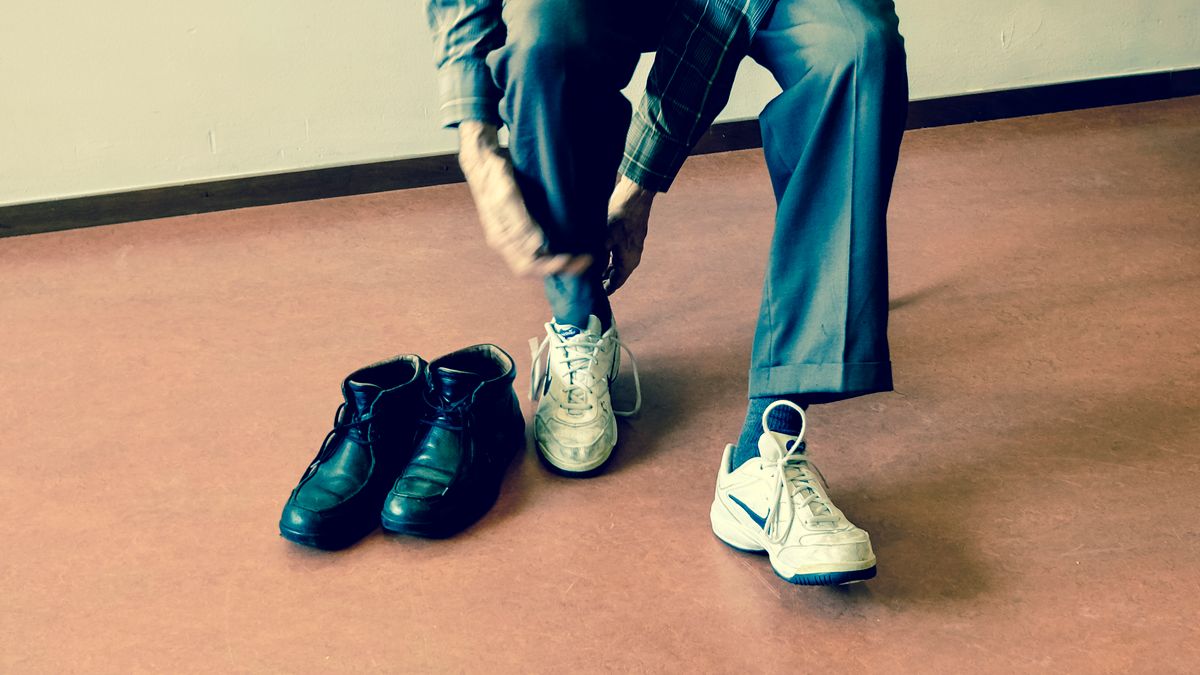
Most men wear a dress shoe a half to a full size smaller than their sneaker size. If you wear a 10.5 in sneakers, your dress shoe size is most likely a 10 or a 9.5. Dress shoes are sized close to your measured foot size on a Brannock device. Sneakers are sized with extra room and padding, so you end up buying them bigger.
The short version
- Start a half size down from your sneaker size.
- Go a full size down if your sneaker size comes from Nike or from shoes you wear roomy.
- Your Brannock size is the anchor. Most dress shoes fit at that size or a half size under it.
- Width matters more in dress shoes. Do not change length to fix a width problem.
- Lasts differ. Two shoes from the same brand can fit a half size apart.
Sneaker Size to Dress Shoe Size Chart
Use this as a starting point when you order. The middle column is the most likely size. The right column applies if your sneakers are Nike, or if you like a lot of toe room in them.
| Sneaker size (US men's) | Likely dress shoe size | If your sneakers fit roomy or are Nike |
|---|---|---|
| 8 | 7.5 | 7 |
| 8.5 | 8 | 7.5 |
| 9 | 8.5 | 8 |
| 9.5 | 9 | 8.5 |
| 10 | 9.5 | 9 |
| 10.5 | 10 | 9.5 |
| 11 | 10.5 | 10 |
| 11.5 | 11 | 10.5 |
| 12 | 11.5 | 11 |
| 13 | 12.5 | 12 |
| 14 | 13.5 | 13 |
This is a guide, not a guarantee. Sizing varies by brand and by last. Measure your feet and read the brand's fit advice before you order.
Do Dress Shoes Run Big or Small?
Dress shoes run big compared with sneakers. At the same marked size, a dress shoe has more length inside than a sneaker, so the size you buy is a smaller number.
Compared with your measured foot size, dress shoes run close to true. The sneaker is the one that is off. That is why the question gets both answers online: people who say dress shoes run big are comparing them with sneakers, and people who say they run true are comparing them with a Brannock measurement.
Why Dress Shoe and Sneaker Sizes Differ
- Lasts. A dress shoe is built on a last, the foot-shaped form, with a tapered toe that extends past your toes. That extra length is built into the size, so a Brannock 10 foot fits a size 10 dress shoe with room in front. Sneaker lasts are shorter and rounder for the same marked size.
- Padding. Sneakers have foam in the collar, tongue, and lining, plus a thick insole. All of it takes up space inside the shoe. A leather-lined dress shoe has almost none, so more of the interior is usable.
- How they are meant to fit. Running shoe fitters advise extra toe room because feet swell and slide forward during exercise. Many men carry that roomy size over to every sneaker they buy. Dress shoes are meant to fit close.
- Brand sizing. Athletic brands do not size to one shared standard. Some fit small for the marked size, which pushes buyers up a half size. Traditional dress shoe makers stay closer to the Brannock scale.
- Stretch. Leather uppers loosen and cork footbeds compress with wear. Synthetic sneaker uppers mostly keep their shape. A dress shoe bought snug gains room. A sneaker does not.
Sizing Notes by Brand
These are commonly cited fit tendencies, not official conversions. Fit changes by model and last, so check the brand's own advice for the shoe you want.
| Brand | Common fit guidance |
|---|---|
| Nike | Tends to fit small against a Brannock measurement. Many men wear Nike a half size above their measured size, and so drop a full size for dress shoes. |
| Adidas, New Balance | Usually closer to measured size than Nike. A half size down for dress shoes is the common result. |
| Converse Chuck Taylor | Runs about a half size large. Your dress shoe size is often the same as your Chuck Taylor size. |
| Allen Edmonds | Many lasts fit at Brannock size or about a half size down from sneaker size. Offered in a wide range of widths, so fix width with the letter. |
| Alden | Several lasts are widely reported to run about a half size large, so many men take a half size under Brannock in those. |
| UK makers (Loake, Crockett & Jones) | Marked in UK sizes. A UK size is roughly one below the US dress size, so a US 10 is about a UK 9. |
| European makers (Meermin, Carmina) | Usually marked in UK sizes as well. Use the maker's chart and last notes. |
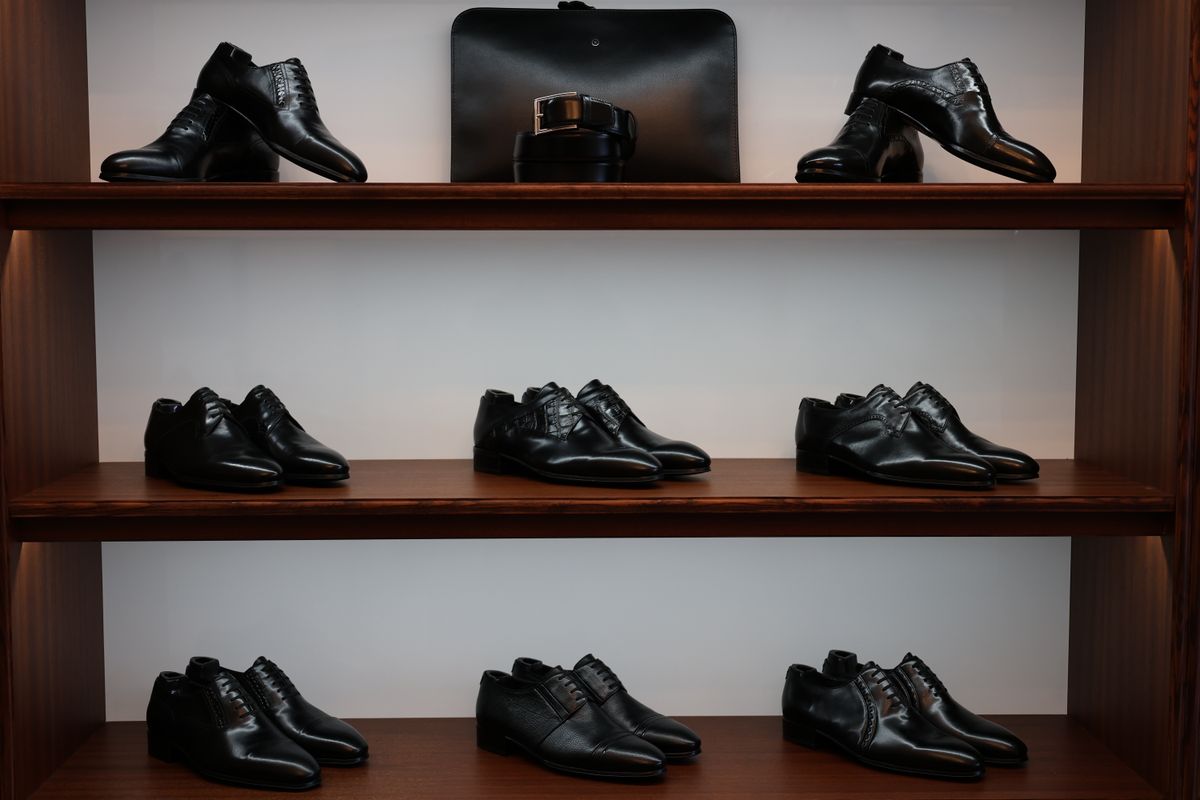
If you are choosing a first pair, our lists of the best Oxford shoes and the best loafers include a fit note for each pick.
How to Measure Your Size on a Brannock Device
The Brannock device is the metal measuring tool in most shoe stores. It gives three readings, and you need all of them.
- Stand up with your full weight on the foot being measured, wearing dress socks. Put your heel firmly in the heel cup.
- Heel-to-toe length. Read the number at the tip of your longest toe.
- Arch length. Slide the pointer to the ball joint, the bump on the inside of your foot behind the big toe. Read the number it shows.
- Pick your length. Use the larger of the two readings. If your arch length says 10.5 and your toe length says 10, you are a 10.5.
- Width. Slide the width bar against the outside of your foot and read the letter that lines up with your length size.
- Measure both feet and fit the larger one.
No device nearby? Measure your foot length in centimeters on paper against a wall and compare it with the brand's chart. The steps are in how dress shoes should fit.
Width: The Other Half of the Size
Sneakers hide width problems. Mesh stretches around a wide foot and padding fills in around a narrow one. Leather dress shoes do neither, so the width letter matters.
- D is standard for men. E and EE are wide. B and C are narrow.
- If you sized up in sneakers to get more width, you may need to drop more than a full size in length and go to a wide width in dress shoes. A sneaker 11 D can turn out to be a dress 10 EE.
- Never go longer to get wider. The shoe will bend in the wrong place and your heel will slip.
What to Do If You Are Between Sizes
- Lace-ups: take the smaller size if it is snug with no pain and your toes are clear of the front. Leather gives in width over the first few weeks.
- Loafers: take the smaller size. Loafers loosen more than lace-ups and have no laces to tighten.
- Boots: take the larger size if you wear thick socks with them.
- Toes touching the front: take the larger size, always. Length does not stretch.
- Slightly loose pair: a thin leather insole or a tongue pad takes up about a half size of volume.
- Ordering online: order both sizes from a store with free returns and try them indoors on carpet.
A new dress shoe in the right size feels firmer than any sneaker. That is normal, and it eases within a few weeks. See how to break in leather shoes for ways to speed that up without blisters.
Dress Shoe Size to Sneaker Size
The rule works in reverse. If you know your dress shoe size and are buying sneakers, go up a half size, or a full size for Nike and for running shoes. Minimal leather sneakers are the exception. Many are built on slimmer, longer lasts and fit closer to dress shoe sizing, which the dress sneakers guide covers by brand.
Converting between men's and women's sizes is a separate step. Use the men's to women's shoe size conversion chart for that.
Frequently Asked Questions
Is dress shoe size the same as sneaker size?
Usually not. Most men wear a dress shoe a half to a full size smaller than their sneaker size. If you wear a 10.5 in running shoes, start with a 10 in dress shoes and try a 9.5 as well.
Do dress shoes run big or small?
Dress shoes run big compared with sneakers, by about a half to a full size. Compared with your measured Brannock size they run close to true, and some lasts run a half size large.
Do dress shoes run smaller than sneakers?
No, the opposite. For the same marked size, a dress shoe is longer inside than a sneaker, so you need a smaller number in dress shoes. The size you buy is smaller, but the shoe itself runs bigger.
Should I size down in dress shoes?
Yes, from your sneaker size. Go down a half size as a starting point and a full size if your sneakers are Nike or another brand you wear with extra room. Do not size down from your Brannock measurement unless the brand tells you to.
If I wear a size 11 in Nike, what size dress shoe do I need?
Most men who wear an 11 in Nike take a 10 or 10.5 in dress shoes. Nike tends to fit small, so a full size down is common. Confirm with a Brannock measurement and the brand's own fit advice.
What if I am between dress shoe sizes?
Choose the smaller size if it is snug without pain, since leather uppers loosen with wear. Choose the larger size if your toes touch the front, and take up extra room with a thin insole or tongue pad.