
As an Amazon Associate, KIXSZN earns from qualifying purchases. Amazon links are affiliate links. Picks are chosen on merit. Makers that do not sell on Amazon link to their own site, with no commission.
Leather shoes can be stretched about a quarter to half a size in width, and almost not at all in length. The safest ways are wearing them at home with thick socks and using a shoe stretcher overnight with a stretch spray. If your toes touch the front of the shoe, it is too short, and no method will fix that.
The short version
- Width stretches. Length does not.
- Best method: a two-way shoe stretcher with stretch spray, left in overnight.
- No tools: thick socks and short wears at home.
- One tight spot: spot-stretching plugs or a cobbler.
- Avoid: freezing bags of water, soaking, and high heat.
- Real leather and suede stretch. Synthetics and patent leather barely move.
7 Ways to Stretch Shoes, Ranked
| Method | Best for | Time | Risk |
|---|---|---|---|
| 1. Thick socks at home | Shoes that are slightly snug all over | 3 to 7 days | Very low |
| 2. Two-way shoe stretcher | Width, and a little length | 1 to 3 nights | Low |
| 3. Stretch spray | Speeding up methods 1 and 2 | Minutes to apply | Low |
| 4. Spot-stretching plugs | Bunions, a pinched little toe | 1 to 2 nights | Low |
| 5. Cobbler | Expensive shoes, stubborn leather, boots | 1 to 2 days | Very low |
| 6. Rubbing alcohol and water | When you have no stretch spray | Minutes to apply | Medium |
| 7. Hair dryer and thick socks | A fast fix for one tight area | 10 minutes | High |
1. Thick socks at home
Put on the thickest socks you own, or two pairs, and wear the shoes around the house for 30 to 60 minutes. Repeat daily. Your body heat and the pressure of your foot do the stretching, in exactly the places your foot needs it. This is also the basic method for breaking in leather shoes. Stay on carpet until you are sure you are keeping the pair, so the soles stay clean enough to return.
2. Two-way shoe stretcher
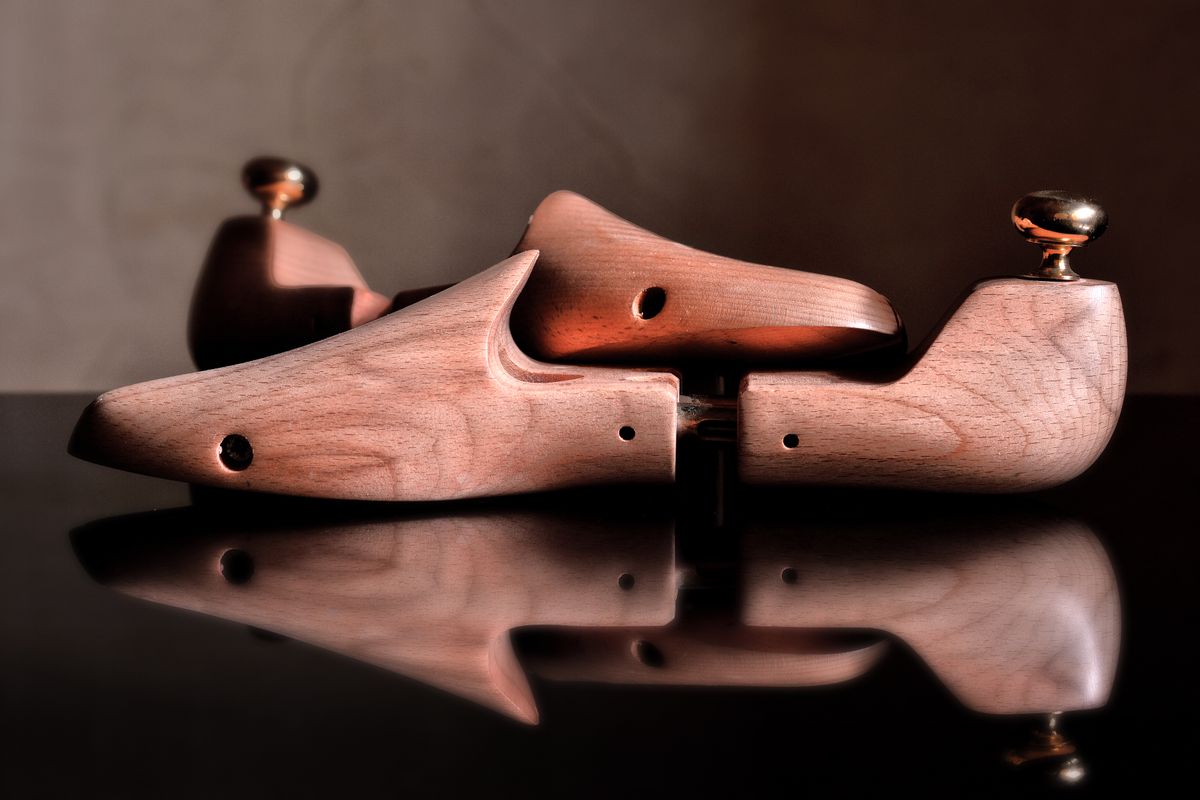
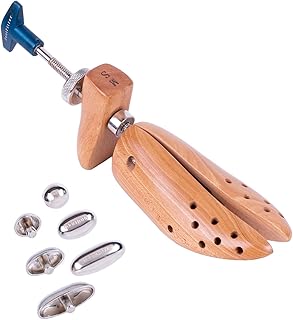
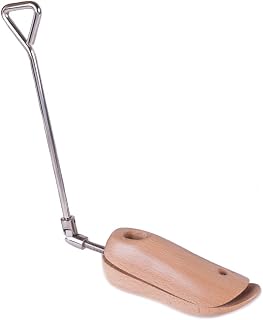
A shoe stretcher is a wooden or plastic foot shape that expands with a handle. A two-way stretcher widens the forefoot and also lengthens slightly.
- Mist the inside of the shoe with stretch spray.
- Insert the closed stretcher all the way to the toe.
- Turn the widening handle until the leather is snug against it, then add three or four more turns.
- Leave it for 6 to 8 hours or overnight.
- Try the shoe on. Repeat with one or two more turns if it is still tight.
Go slowly. Two or three moderate nights are safer than one hard stretch, which can distort the shape or stress the stitching.
3. Stretch spray
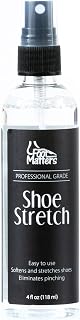
Stretch spray is a mild solution that relaxes leather fibers so they move more easily. Spray the inside of the tight area, then wear the shoe or insert a stretcher straight away. It is made for leather and suede, and it is the gentler version of the alcohol method below.
4. Spot-stretching plugs
Most stretchers have small holes on the sides for plastic plugs. Push a plug into the hole that lines up with the sore spot, such as a bunion or the joint of your little toe, and the stretcher will push the leather out at that point only. This fixes a pressure point without loosening the rest of the shoe.
5. Cobbler
A cobbler uses a stretching machine with heat and interchangeable forms, and can stretch a specific area with more control than a home tool. It is the right choice for expensive shoes, thick leather, and the instep or shaft of a boot. Ask how much stretch they think the shoe will take before they start.
6. Rubbing alcohol and water
Mix equal parts rubbing alcohol and water in a spray bottle. Spray the inside of the tight area until it is damp, not soaked, then wear the shoes with socks until they dry, about 20 to 30 minutes. Alcohol evaporates fast and softens the leather while it is damp.
The risk is real. Alcohol strips oils, which can dry the leather and leave light patches, especially on tan and aniline leathers. Test on a hidden area, keep it off the outside of the shoe, and condition the leather afterward.
7. Hair dryer and thick socks
Wear thick socks and the shoes, then warm the tight area with a hair dryer on low for 20 to 30 seconds at a time, keeping it moving and about six inches away. Flex your foot while the leather is warm and keep the shoes on until they cool. Heat dries leather, weakens glue, and can crack finishes, so use this as a last resort and condition the shoe afterward. Do not use it on patent leather or cemented soles.
3 Shoe Stretching Methods to Avoid
- Freezing a bag of water inside the shoe. Ice expands unevenly, the bag can leak, and the cold and moisture can stain the lining and loosen glue.
- Soaking the shoes and wearing them dry. Water strips oils, leaves tide marks, and can warp the insole and shrink the leather as it dries.
- High heat. An oven, a radiator, or a hot hair dryer held close will dry and crack leather and melt the cement that holds the sole.
Stuffing shoes with wet newspaper or a potato is harmless but weak. It holds the shape. It does not apply enough force to stretch a shoe that pinches.
How Much Can Shoes Stretch?
| Direction | How much | Why |
|---|---|---|
| Width at the ball of the foot | About a quarter to half a size | The vamp leather is soft and unreinforced |
| Instep height | A little | Possible with a boot or instep stretcher |
| Length | A few millimeters at most | The toe box and heel counter are stiffened and the sole is fixed |
| Boot shaft or calf | Up to about half an inch | Needs a shaft stretcher or a cobbler |
The rule from our dress shoe fit guide applies here. If a new shoe is snug across the ball but your toes have room, stretching will work. If your toes touch the end or the shoe causes sharp pain, it is the wrong size. Many men buy dress shoes too big or too small because they use their sneaker size, which is covered in dress shoe size vs sneaker size.
Stretching by Material
| Material | Does it stretch? | Best method |
|---|---|---|
| Calfskin and other smooth leather | Yes | Stretcher with stretch spray |
| Suede and nubuck | Yes, easily | Thick socks or a stretcher. Use suede-safe spray and no heat |
| Shell cordovan | Very little | Cobbler only |
| Patent leather | Barely | Cobbler. Heat and alcohol can crack the coating |
| Synthetic leather | Barely, and it springs back | Exchange for the right size |
| Canvas | A little | Thick socks and wear |
| Knit and mesh sneakers | Gives, but returns to shape | Go up half a size |
Unlined styles give the most. Unlined suede loafers and chukka boots can loosen noticeably with normal wear, so buy those snug.
How to Stretch Boots
A boot can be tight in three places a shoe stretcher will not reach: over the instep, around the ankle, and around the calf. An instep stretcher raises the vamp, which is the usual fix for Chelsea boots that are hard to pull on. A shaft stretcher widens the calf. Both work the same way as a shoe stretcher: spray, insert, expand, and leave overnight.
Stretching Shoes for Wide Feet and Bunions
Stretching can make a standard-width shoe comfortable for a slightly wide foot. It will not turn a D width into an EE. If the upper bulges over the edge of the sole, the shoe is too narrow, and the better fix is the same size in a wider width. For a single pressure point such as a bunion, spot-stretching plugs or a cobbler's ball-and-ring tool work well, because they move the leather only where you need it.
After You Stretch
- Condition the leather. Stretching, alcohol, and heat all dry it out.
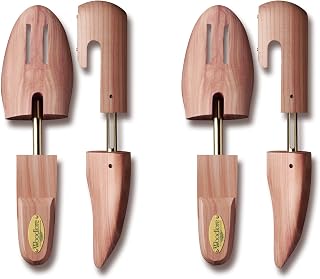
- Use shoe trees. They hold the new shape and stop the leather shrinking back as it dries.
- Polish. A coat of cream restores color where the leather was worked. See how to polish shoes.
- Wear them soon. Leather relaxes back a little if the shoes sit unworn for weeks.
Frequently Asked Questions
How can I stretch my shoes at home?
Wear them around the house with thick socks for 30 to 60 minutes a day, or put a two-way shoe stretcher in them overnight after a light mist of stretch spray. Both methods widen leather shoes gradually without damaging them.
How much can shoes be stretched?
Leather shoes stretch about a quarter to half a size in width. Length barely changes, because the toe and heel are stiffened and the sole is a fixed size. If your toes hit the front, the shoe is too short and stretching will not fix it.
Can you stretch shoes a full size?
No. A full size is beyond what the leather and the sole allow. Forcing it distorts the shape and can split seams. Exchange the shoes for the right size.
Does rubbing alcohol stretch shoes?
Yes. A mix of half rubbing alcohol and half water sprayed inside the shoe softens leather so it stretches as you wear it or over a stretcher. It can also dry and discolor leather, so test it on a hidden spot first and condition the shoe afterward.
How long should a shoe stretcher stay in?
Leave it in for at least 6 to 8 hours, ideally overnight. Check the fit, then repeat for another night with one or two more turns if needed. Stretching slowly over two or three nights is safer than one hard stretch.
Can you stretch shoes that are too short?
Not in any useful way. A two-way stretcher can add a small amount of length, but the stiff toe box and the sole limit it to a few millimeters. Shoes that are too short should be returned.
Do synthetic or patent leather shoes stretch?
Very little. Synthetic uppers and patent leather have a plastic coating that does not give like natural leather, and they tend to spring back. Buy these in the correct size.
How much does a cobbler charge to stretch shoes?
It varies by shop and region, but stretching is one of the cheapest cobbler services, usually less than the cost of a home stretcher. Cobblers use a stretching machine and can target one spot, such as a bunion.