
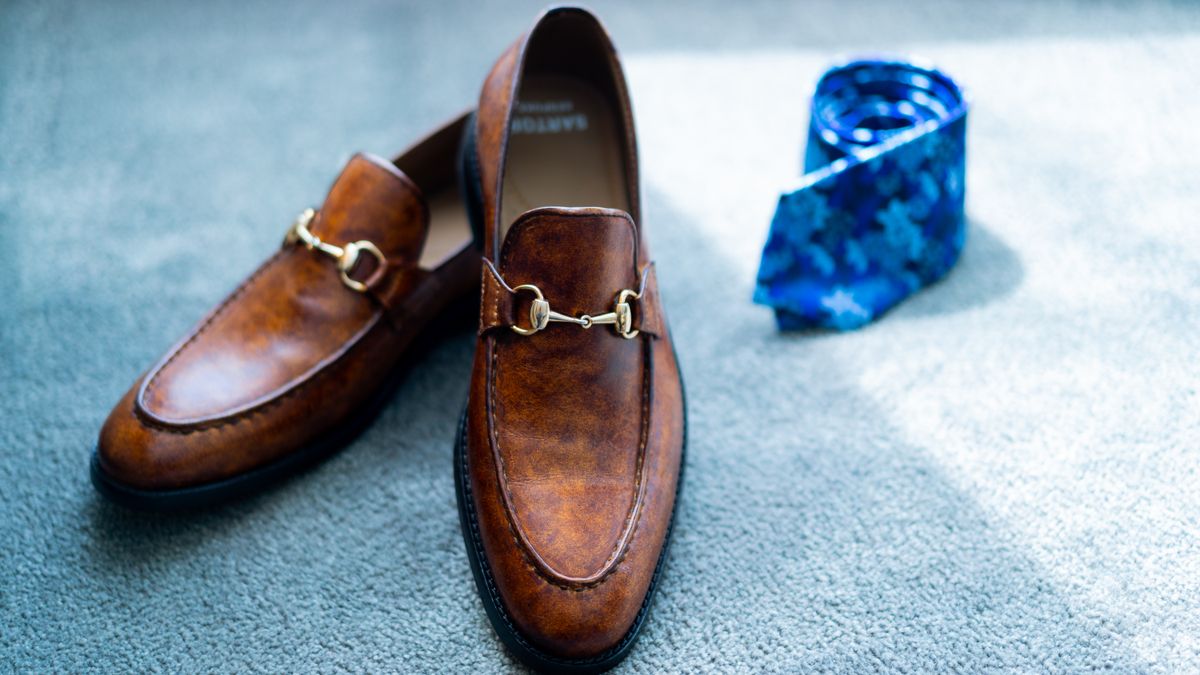
A loafer is a laceless, low-cut shoe with a moccasin-style upper, a separate sole, and a low heel. There are six main types: penny, tassel, horsebit, Belgian, Venetian, and the driving moc. A dark brown or burgundy penny loafer is the one to buy first. Because there are no laces to adjust, fit at the heel and across the width decides whether a loafer works.
The short version
- Loafer vs slip-on: slip-on is the category. A loafer is one kind of slip-on, defined by its moccasin toe seam, low cut, and separate heel.
- Most versatile: penny loafer in brown or burgundy leather.
- Dressiest: black or dark brown tassel and horsebit loafers.
- Most casual: driving mocs and unlined suede loafers.
- Socks: dress socks with tailoring, no-show socks for the bare-ankle look.
- Fit: buy them snug. They only get looser.
Types of Loafers for Men
| Type | How to spot it | Formality | Best with | Socks |
|---|---|---|---|---|
| Penny loafer | A leather strap across the vamp with a small slot cut in it | Casual to business casual | Jeans, chinos, flannels, casual suits | Either |
| Tassel loafer | Two leather tassels on a lace that runs around the collar | Business casual to business | Suits, blazer and trousers | Dress socks |
| Horsebit loafer | A metal bar shaped like a horse's snaffle bit across the vamp | Business casual to business | Suits, tailored trousers, dark denim | Either |
| Belgian loafer | A small bow on the vamp, piped seams, a soft slipper-like build | Smart casual, evening | Tailored trousers, linen, summer suits | No-show or thin socks |
| Venetian loafer | A plain vamp with no strap, tassel, or hardware | Casual to business casual | Chinos, summer trousers | Either |
| Driving moc | Rubber pebbles on the sole that wrap up the back of the heel | Casual only | Shorts, chinos, linen | No-show |
Penny loafer
The penny loafer is the reference point for the whole category. G.H. Bass introduced its Weejuns in 1936, based on a Norwegian slip-on, and the style became a fixture of American college dress by the 1950s. The slot in the strap is where the "penny" name comes from. A penny loafer with a visible hand-sewn toe seam and a leather sole is casual enough for jeans and neat enough for a blazer.
Tassel loafer
The tassel loafer is the dressier American classic. Alden introduced the style around 1950, and it became the standard slip-on for lawyers and bankers in the US. In black or dark brown calf, or in burgundy shell cordovan, it is the loafer most accepted with a business suit.
Horsebit loafer
Gucci introduced the horsebit loafer in 1953, and the style is still often called the Gucci loafer. It has a slimmer shape and a softer build than a penny loafer. Black with a gold-tone bit is the standard. Keep other metal, such as your belt buckle and watch, in the same tone.
Belgian loafer
The Belgian loafer comes from Belgian Shoes, the New York company Henri Bendel started in the 1950s. It is light and soft, with a small bow and contrast piping. It sits close to a house slipper in construction, so it suits dinners, parties, and warm weather more than daily commuting.
Driving moc
The driving moc was designed in Italy for grip on car pedals. The rubber nubs continue up the heel to protect the leather where your foot pivots. Tod's Gommino is the best-known version. It has no real sole or heel, so it wears quickly on concrete. Treat it as a weekend and travel shoe.
Kiltie
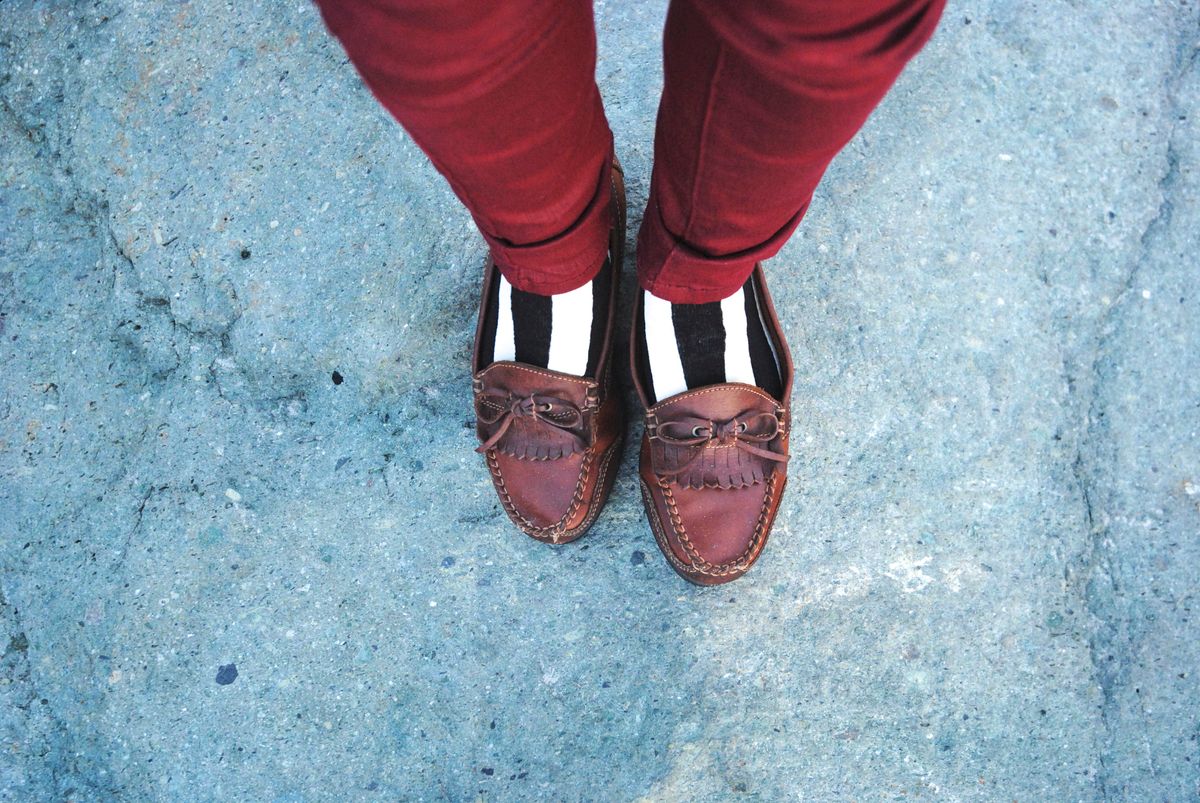
A kiltie is a fringed leather tongue laid over the vamp. It appears on penny and tassel loafers as an added detail. It makes any loafer more casual and more noticeable.
Loafer vs Slip-On: What Is the Difference?
Slip-on describes how a shoe goes on. Loafer describes how it is built. A slip-on is any shoe with no laces, buckles, or straps to fasten. That includes loafers, canvas skate shoes, espadrilles, slippers, and elastic-sided dress shoes. A loafer is the specific leather or suede slip-on with these features:
- A moccasin-style upper, usually with a raised seam around the toe (the apron).
- A low-cut collar that sits below the ankle bone.
- A separate sole and a distinct low heel.
- No elastic. The shape of the shoe holds it on your foot.
| Loafer | Other slip-ons | |
|---|---|---|
| Upper | Leather or suede, moccasin construction | Canvas, knit, leather, or synthetic |
| Sole | Separate leather or rubber sole with a heel | Often a flat cupsole or rope sole with no heel |
| How it stays on | Fit alone | Often elastic gores or a stretch collar |
| Dress level | Smart casual to business | Casual |
| Examples | Penny, tassel, horsebit | Vans Slip-On, espadrille, slipper, side-gore dress shoe |
So "slip-on vs loafer" is not a contest. If a dress code says loafers are fine, a canvas slip-on sneaker does not count. If it says slip-ons are fine, a loafer always qualifies.
Socks or No Socks with Loafers?
Both are accepted. The setting decides.
| Situation | What to wear |
|---|---|
| Suit at the office | Over-the-calf dress socks matched to the trousers |
| Blazer and flannels or chinos, fall and winter | Mid-calf socks, solid or patterned |
| Chinos or jeans, spring and summer | No-show socks |
| Shorts | No-show socks. Visible dress socks with shorts look wrong |
| Linen or cotton summer suit | No-show socks or thin dress socks |
| Penny loafers with cropped trousers | White or cream ribbed socks are a deliberate Ivy-style option |
Wear no-show socks instead of going truly barefoot. They give the same look, and they keep sweat out of the lining, which is what ruins loafers from the inside. Pick a pair with a silicone grip at the heel so it stays put. More detail in what socks to wear with dress shoes.
How Should Loafers Fit?
A laced shoe can be tightened. A loafer cannot. The heel and the width have to be right out of the box.
- Heel: the back of the shoe should grip your heel. A little lift in a new pair with a stiff leather sole is normal and fades as the sole breaks in. If your heel pops out, the shoe is too big.
- Width: firm pressure across the ball and instep, with no sharp pinching. Leather loafers give a little in width over the first few weeks. They do not get longer.
- Instep: the top edge of the vamp should rest on your foot. A gap you can slide a finger into means the shoe has too much volume for you.
- Length: toes should lie flat and not touch the end. Loafers are fitted closer than lace-ups, so you will have less spare room in front.
- Sock plan: try them on with the socks you will wear. A loafer fitted with thick socks will be loose with no-shows.
- Unlined and suede loafers: these stretch more than lined calfskin. Buy them on the snug side.
Most men take the same size as their lace-up dress shoes or a half size smaller, and a half to a full size below their sneaker size. Lasts vary a lot between brands, so check each maker's advice. If you are between widths, the narrower one is usually right for a loafer. A cobbler can add a tongue pad under the vamp to tighten a slightly loose pair, but nothing fixes a loafer that is too long. See how dress shoes should fit for measuring length and width at home. Men with small or narrow feet can also look at women's loafers. See can men wear women's shoes for the size conversion.
How to Wear Loafers
- With a suit: tassel or horsebit loafers in black, dark brown, or burgundy. Trousers should have little or no break so the low vamp is not buried in fabric. For conservative offices and formal events, wear Oxfords instead.
- Business casual: brown or burgundy penny loafers with chinos or wool trousers and a blazer or knit. This is the loafer's home ground. See business casual shoes.
- With jeans: penny or horsebit loafers with straight or slim jeans, hemmed or cuffed to show the ankle or sock.
- With shorts: suede penny loafers, Venetians, or driving mocs with tailored shorts that end above the knee.
- Evening: black horsebit or Belgian loafers with dark trousers. For black tie, the correct slip-ons are opera pumps or velvet slippers, not everyday loafers.
Which color to buy
| Color | Use |
|---|---|
| Dark brown leather | The widest range. Navy, gray, olive, tan, denim |
| Burgundy or oxblood | The classic penny and tassel color. Works with navy, gray, and brown |
| Black leather | Charcoal and black tailoring, evening, black jeans |
| Brown or snuff suede | Spring and summer, chinos, linen, light denim |
If you wear a belt, keep it close to the shoe color. See how to match your belt to your shoes.
What to Look For When Buying
- Construction: a stitched sole can be replaced. Blake stitching is common on loafers because it keeps the sole thin and flexible. Goodyear-welted loafers are sturdier and stiffer at first. The trade-offs are in Goodyear welt vs Blake stitch.
- Toe seam: on better loafers the apron is sewn through the leather by hand or machine. On cheap pairs it is a pressed-in line that only imitates a seam.
- Lining: lined loafers hold their shape and suit socks. Unlined loafers are softer and cooler for summer.
- Brands to start with: G.H. Bass for the original penny loafer, Alden and Allen Edmonds for American tassel and penny loafers, Carmina and Meermin from Spain, Crockett & Jones and Loake from England, and Gucci for the horsebit.
For specific models with fit notes and drawbacks, see our list of the best loafers for men.
Frequently Asked Questions
What is the difference between loafers and slip-on shoes?
Slip-on is the broad category: any shoe without laces or buckles. A loafer is one kind of slip-on, with a moccasin-style upper, a low-cut opening below the ankle, and a separate sole with a distinct heel. Every loafer is a slip-on, but a Vans slip-on, an espadrille, or a Chelsea boot is not a loafer.
What is a loafer?
A loafer is a laceless, low-cut leather or suede shoe with a moccasin-style seam around the toe, a separate sole, and a low heel. The main types are penny, tassel, horsebit, Belgian, Venetian, and driving loafers.
Should you wear socks with loafers?
Both are correct. Wear over-the-calf or mid-calf dress socks with a suit, at the office, and in cold weather. Wear no-show socks, not bare feet, when you want the sockless look with chinos, shorts, or summer tailoring.
Can you wear loafers with a suit?
Yes. Dark leather tassel, horsebit, and penny loafers work with most business and casual suits. They are less formal than Oxfords, so choose lace-ups for conservative offices, interviews, and funerals. Black tie calls for a different slip-on, such as an opera pump or a velvet slipper.
How should loafers fit?
Snug. With no laces to tighten, a loafer has to hold your foot at the heel and across the instep from day one. It should feel firm but not painful when new, because leather loafers stretch slightly in width with wear.
Is heel slip normal in loafers?
A small amount of lift in a new pair with a stiff sole is normal and eases as the sole flexes. If your heel comes out of the shoe when you walk, the loafer is too long or too wide.
What is the most versatile loafer?
A dark brown or burgundy leather penny loafer. It works with jeans, chinos, flannel trousers, and casual suits, with or without visible socks.
Are driving shoes loafers?
Driving mocs are the most casual branch of the loafer family. They have a soft, unstructured upper and rubber pebbles in place of a full sole and heel, so they wear out fast on pavement and do not suit office or dress wear.