
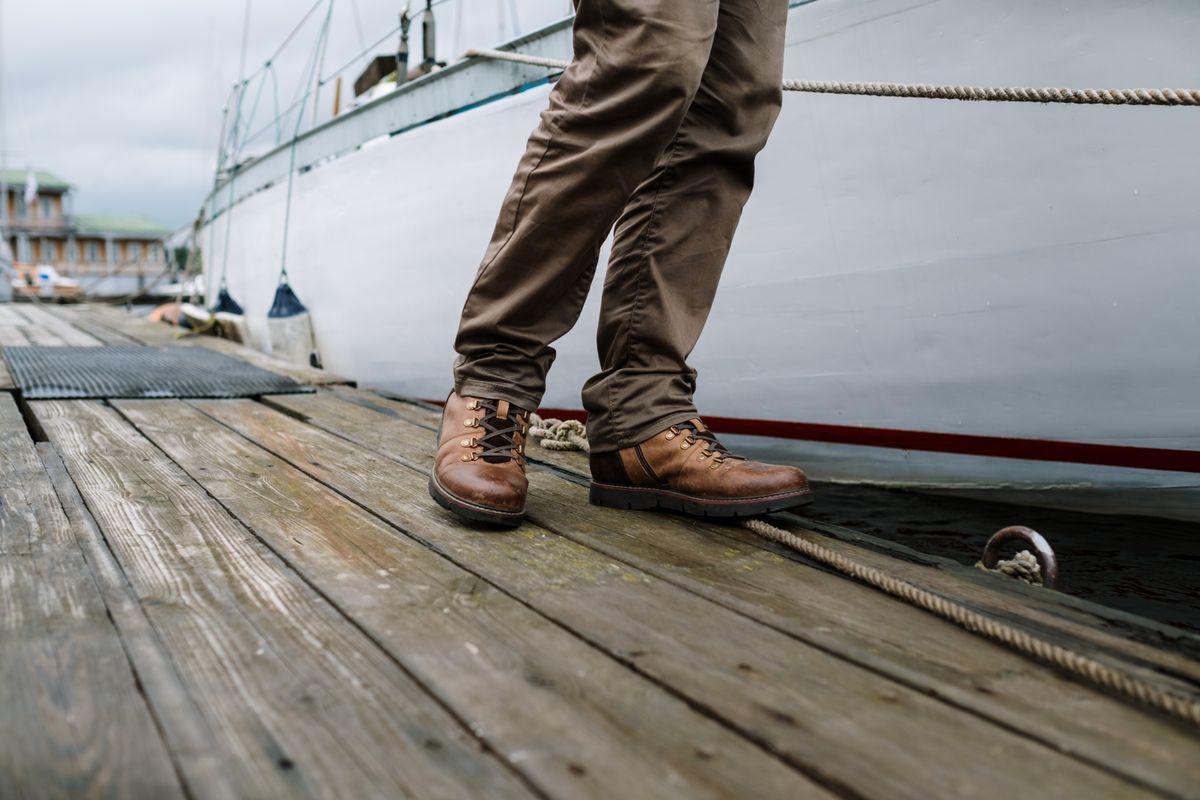
A dress boot is a slim leather ankle boot built like a dress shoe: smooth upper, narrow toe, thin sole, low heel. Compared with dress shoes, dress boots are warmer, better in rain and snow, and slightly less formal. You can wear them with a suit in every setting except black tie. The five main types are the Chelsea, the chukka, the cap-toe lace-up (including the Balmoral), the brogue boot, and the jodhpur.
The short version
- Boots vs shoes: same leather and shape, more height. Boots win in cold and wet weather. Shoes win on formality and in heat.
- With a suit: yes. Pick dark, smooth leather and a thin sole.
- Most formal: black Balmoral boot.
- Most versatile: dark brown cap-toe lace-up or dark brown Chelsea.
- Most casual: suede chukka and heavily brogued wingtip boots.
- Not a dress boot: anything with a thick lug sole, a bulbous toe, or padded collar.
Dress Boots vs Dress Shoes
| Dress boots | Dress shoes | |
|---|---|---|
| Height | Covers the ankle | Sits below the ankle |
| Formality | Business and below | Up to black tie |
| Cold and wet weather | Better. Covers the ankle and keeps trouser hems off wet ground | Worse. Socks and ankles are exposed |
| Hot weather | Warm | Cooler |
| Ankle support | Some | None |
| Getting them on | Slower, except for Chelsea boots | Faster |
| Socks on show | Hidden when standing and mostly when seated | Visible when seated |
| Best trouser | Slight or no break, hem wide enough to sit over the shaft | Any break |
| Season | Fall, winter, early spring | All year |
Under a trouser hem, a sleek dress boot and a dress shoe look nearly the same from the front. The difference shows when you sit or cross your legs: a boot shows leather where a shoe shows sock.
Choose boots when it is cold or wet, you walk a lot outdoors, or your trousers are heavy fabrics such as flannel, tweed, corduroy, or denim.
Choose shoes when the dress code is black tie or strict business formal, the weather is hot, or your suit is a lightweight worsted or linen.
What Makes a Boot a Dress Boot?
- Upper: smooth calfskin, or fine suede for less formal pairs. No heavy oil-tanned or distressed leather.
- Shape: a slim last with an almond or soft chisel toe, the same shape as a dress shoe.
- Sole: a single leather sole or a thin studded rubber sole such as Dainite. No deep lugs.
- Height: ankle height, roughly 5 to 6 inches from the heel seat.
- Details: small eyelets or neat speed hooks, thin waxed laces, minimal padding.
Closed (Oxford) lacing is more formal than open (Derby) lacing on boots, exactly as it is on shoes. See the Oxford shoe guide for how to tell the two apart.
Types of Dress Boots
| Type | Closure | Formality | Wear it with |
|---|---|---|---|
| Balmoral and cap-toe lace-up | Laces. Closed on a Balmoral, open on a Derby boot | Highest. Business suits | Worsted and flannel suits, dress trousers, overcoats |
| Chelsea boot | Elastic side panels, no laces | High in black or dark brown calf. Medium in suede | Slim suits, chinos, dark jeans |
| Jodhpur boot | A strap that wraps the ankle and buckles on the outside | Medium to high | Tailored trousers, tweed, slim suits |
| Brogue or wingtip boot | Laces, usually open | Medium | Tweed, flannel, corduroy, chinos, jeans |
| Chukka boot | Two or three pairs of eyelets, open lacing | Medium to low | Chinos, jeans, casual suits, sport coats |
Balmoral and cap-toe lace-up boots
The Balmoral boot is an Oxford that continues above the ankle. It has closed lacing and a horizontal seam that divides the lower part of the boot from the shaft. The style is named for Balmoral Castle in Scotland and is associated with Prince Albert in the mid-1800s. Some versions use a contrasting upper section in suede or cloth, which is a Victorian detail.
A black cap-toe Balmoral is the boot that replaces a black Oxford in winter. A cap-toe boot with open lacing is a little less formal and fits high insteps better. Either one in dark brown is the most useful dress boot you can own.
Chelsea boots
The Chelsea is a laceless ankle boot with an elastic panel on each side. With no laces or seams across the front, a black or dark brown calfskin Chelsea on a leather sole looks clean with a slim suit. In suede it drops to smart casual. Toe shape and sole thickness change how formal it reads. The full breakdown is in our Chelsea boots guide.
Chukka boots
A chukka is an ankle boot with two or three pairs of eyelets, open lacing, and a plain rounded toe. The desert boot is a chukka with a crepe rubber sole and an unlined suede upper, made famous by Clarks from 1950. A dark brown calf chukka on a leather sole can go with a casual suit. A suede desert boot is a jeans and chinos shoe. See the chukka boots guide for the differences.
Brogue and wingtip boots
These are lace-up boots with perforated seams and, on a full brogue, a W-shaped wingtip cap. Broguing began as a country detail, and it still reads that way. Brogue boots in brown grain leather on a studded rubber sole are a natural match for tweed, flannel, and denim. They are too busy for a formal city suit.
Jodhpur boots
The jodhpur is a riding boot named after the city in India. A long strap wraps around the ankle and buckles on the outer side. It is as sleek as a Chelsea, with a buckle instead of elastic. It is the least common of the five and works with the same outfits as a dress Chelsea. Our best Chelsea boots for men list covers the closest alternatives you can buy at every budget.
Can You Wear Boots with a Suit?
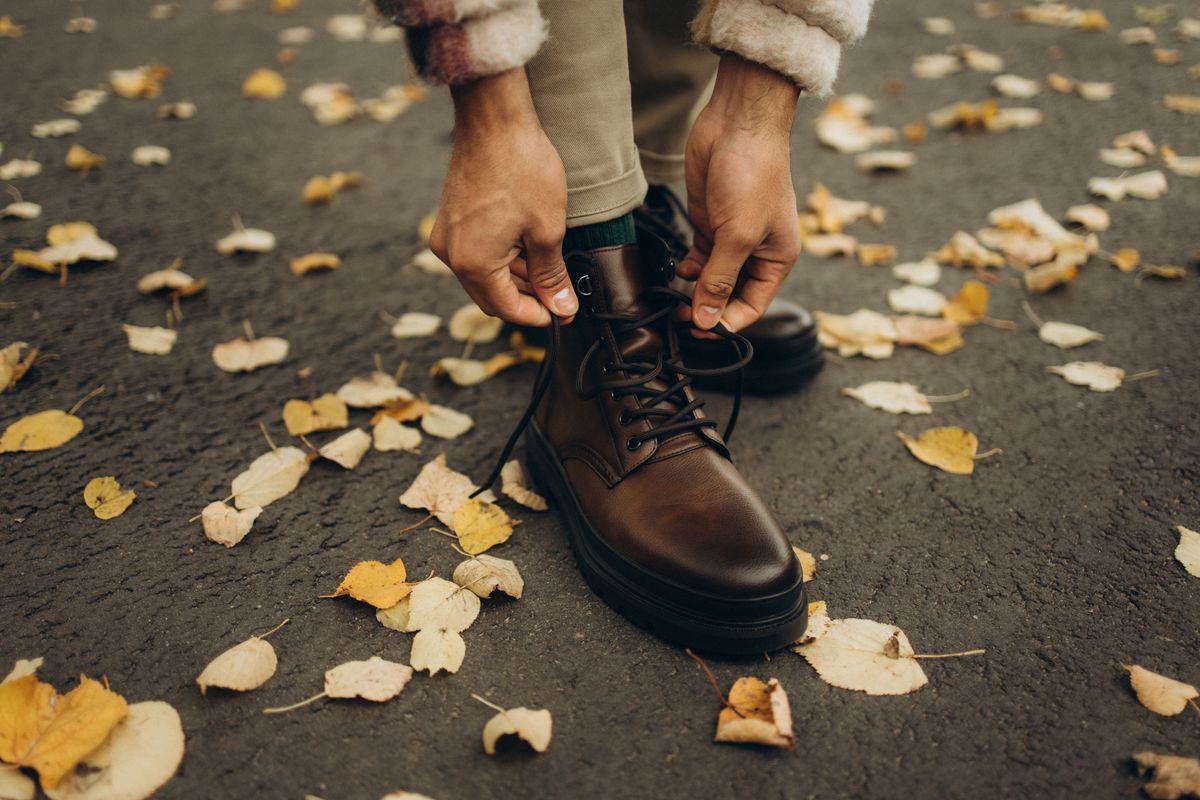
Yes. Boots were normal with tailored clothing long before low shoes were. The boot has to match the suit in weight and finish.
| Suit | Boot that works |
|---|---|
| Charcoal or black business suit | Black Balmoral, black cap-toe, or black calf Chelsea |
| Navy worsted suit | Dark brown or oxblood cap-toe, Balmoral, or Chelsea. Black for formal settings |
| Gray flannel suit | Dark brown cap-toe, brown suede Chelsea, brown chukka |
| Tweed or corduroy suit | Brown brogue boot, grain leather Derby boot, suede chukka |
| Linen or summer cotton suit | Skip boots. Wear loafers or Derbies |
| Tuxedo | None. Wear black Oxfords |
Rules that keep it looking right:
- Color: follow the normal suit rules. Black with black and charcoal. Brown or oxblood with navy, mid-gray, and earth tones. See brown vs black dress shoes.
- Sole: thin. A leather or low-profile studded rubber sole, never a lug sole.
- Trousers: a slight break or none, with a hem wide enough that the fabric falls over the shaft instead of catching on it.
- Finish: polished. Scuffed boots look like weather gear.
Dress Boots with Chinos and Jeans
- Chinos and wool trousers: any dress boot works. Brown chukkas and Chelseas are the easiest.
- Jeans: dark denim, straight or slim. Let the hem rest on the boot or turn a single cuff. Suede and brogue boots suit denim best. A high-shine black Balmoral does not.
- Socks: mid-calf or over-the-calf so the boot collar never rubs skin. Thin wool is warmer and drier than cotton. More in what socks to wear with dress shoes.
How Should Dress Boots Fit?
- Size: start with your dress shoe size in the same brand, usually a half size below your sneaker size.
- Length: a thumb's width, about half an inch, in front of your longest toe.
- Ball: the widest part of your foot at the widest part of the boot.
- Heel: a quarter inch of lift is normal in a new welted boot with a stiff sole. It should fade within a few weeks. More than that means the boot is too big.
- Instep and ankle: laced boots should close with a gap of about half an inch between the facings. Chelsea and jodhpur boots cannot be adjusted, so the instep has to fit as bought.
- Socks: fit boots in the socks you plan to wear. A thick winter sock can take up half a size.
The measuring method is in how dress shoes should fit.
What to Look For When Buying
- Construction: a Goodyear welt is the standard for dress boots. It adds water resistance at the sole edge and lets a cobbler resole the boot several times. Blake-stitched boots are slimmer and more flexible. Compare them in Goodyear welt vs Blake stitch.
- Sole: studded rubber for daily winter wear, leather for the dressiest pairs.
- Leather: full-grain calfskin takes polish and resists water better than suede. Suede needs a protector spray and dry days.
- First pair: a dark brown cap-toe lace-up or a dark brown Chelsea. Second pair: the same in black, or a suede chukka.
- Brands: Thursday Boot Co. and Meermin at the lower tiers, Allen Edmonds, Grant Stone, and Loake in the middle, Alden, Carmina, and Crockett & Jones at the top.
For specific models with construction, price tier, fit notes, and drawbacks, see our picks for the best dress boots for men.
Frequently Asked Questions
What is the difference between dress boots and dress shoes?
Height and formality. A dress boot uses the same leather, slim shape, and thin sole as a dress shoe but rises above the ankle. Boots are warmer and better in bad weather. Dress shoes are slightly more formal and are the only correct choice for black tie.
Can you wear boots with a suit?
Yes, if they are dress boots. Choose smooth dark leather, a slim toe, and a thin leather or studded rubber sole. Balmoral boots, cap-toe lace-ups, and sleek Chelsea boots all work. Work boots, lug soles, and heavily distressed leather do not.
What are the types of dress boots?
The five main types are Chelsea boots, chukka boots, cap-toe lace-up boots (including the Balmoral), brogue or wingtip boots, and jodhpur boots.
Are dress boots business casual?
Yes. Dress boots are a standard business casual shoe, especially in fall and winter. Brown chukkas, Chelsea boots, and brogue boots all pair well with chinos, wool trousers, and a blazer.
What is the most formal dress boot?
The black Balmoral boot. It has closed Oxford-style lacing and a cap toe, and from under a trouser hem it looks the same as a black cap-toe Oxford.
Can you wear dress boots with jeans?
Yes. Chukkas, Chelsea boots, and brogue boots in brown leather or suede work with dark jeans. Let the hem sit on top of the boot or add a single cuff. Do not tuck jeans into dress boots.
Can you wear dress boots to a wedding?
Yes, for most fall and winter weddings with a suit dress code. Choose a polished black or dark brown Balmoral, cap-toe, or Chelsea boot. For black tie, wear black Oxfords instead.
Do dress boots fit the same as dress shoes?
Mostly. Most men take the same size in dress boots as in dress shoes from the same brand, which is usually a half size below their sneaker size. Check the instep and ankle as well, since a boot has to hold the foot higher up.